
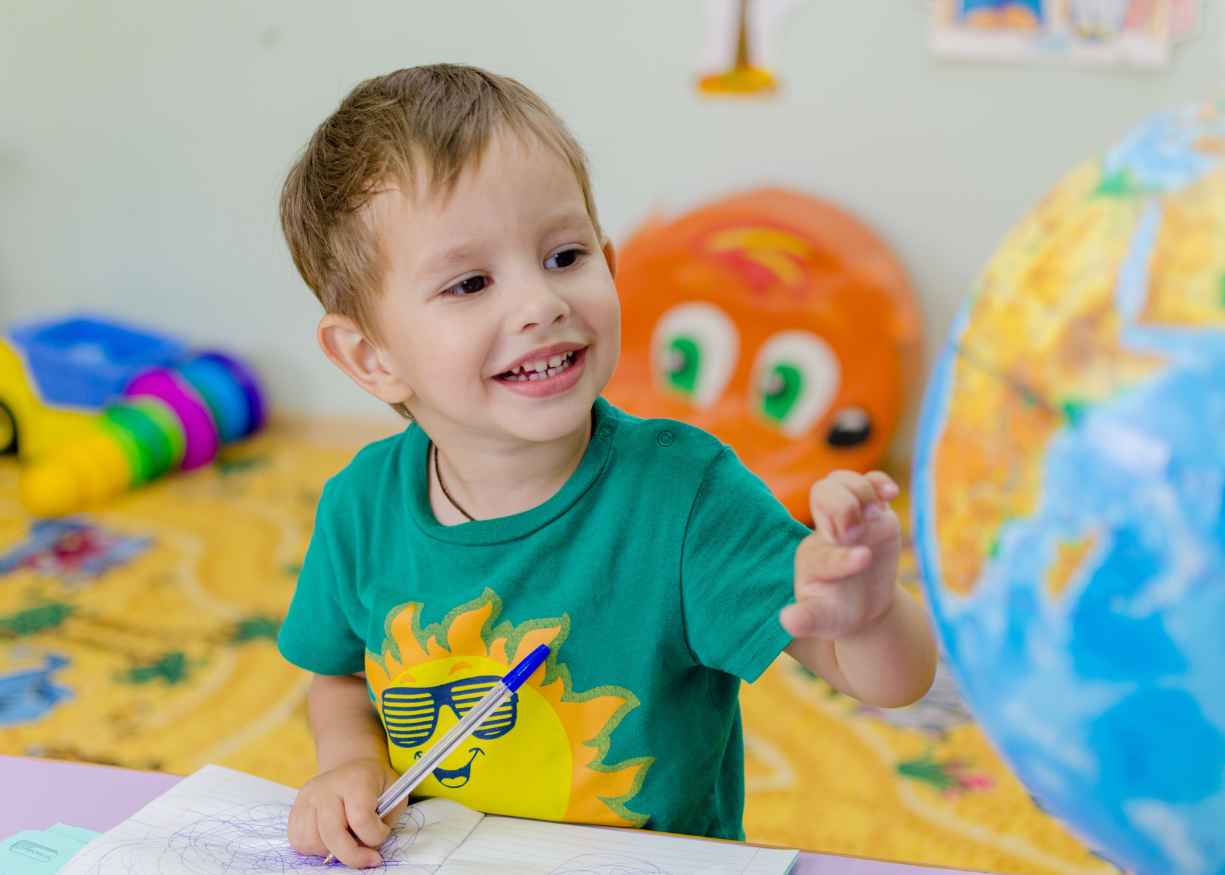
Families arrive at our four-year-old room asking the same question: is my child ready? Usually they mean can they write their name, count to twenty, and read a few words. The honest answer is that those skills are the least important part of readiness, and that a child who can open their own lunchbox, ask a grown-up for help, and take a turn with a contested shovel is far better prepared for their first week than one who has been drilled on phonics.
What school readiness actually means
The Early Years Learning Framework — the national curriculum every approved service works to — describes children who are strong in their identity, connected to their world, capable and communicative. That is a much better description of a school-ready child than a checklist of academic skills. Teachers tell the same story: the child who struggles in their first term is usually the one who cannot manage the practical and social demands of a classroom, not the one who cannot yet sound out a word.
The year before school in Victoria
In Victoria, funded kindergarten is available for children in the year before school, and it is delivered by a degree-qualified early childhood teacher. The state's Three Year Old Kinder Program and its kinder quick guide for parents explain eligibility, hours and how to enrol — worth reading before your child's third year so you are not caught by waitlists. At Lumora, our four-year-old Wanderers room delivers kindergarten in-house, so children stay with educators and a building they already know, and our three-year-old Voyagers room builds towards it.
Independence comes first
A child who can do the ordinary things themselves arrives at school with confidence intact. Practise these relentlessly, and give the time it takes rather than doing it for them:
- Opening and closing their own bag, lunchbox, drink bottle and cookie tin
- Putting on shoes with Velcro, a coat, and their own hat
- Using the toilet, wiping, flushing and washing hands without prompting
- Eating a meal in a reasonable time and packing their plate away
- Getting dressed for the weather and recognising their own belongings
- Asking an adult for help with words rather than waiting or crying
Conversation and early literacy
Talking is the real pre-reading skill. Have real conversations on the walk to the car: what happened, what you noticed, what do you think happens next. Read together daily and let your child retell the story in their own words. Name letters in passing — on signs, on packaging, on their own name — but keep it playful. Writing their name matters because it is theirs, not because it is academic; a child who can write it on an artwork feels like a school kid. For a broader picture of what is typical with speech and language, Speech Pathology Australia's Communication Milestones Kit is a helpful reference.
Practise the logistics
School is a different rhythm: a bell, a large yard, a different teacher, a lunch you have to manage alone. In the last term before school, do dry runs — walk the route, sit at the gate, practise the lunchbox, and if your council runs a transition program or the school offers orientation visits, take every one of them. If your child is anxious, make it concrete: show them the toilet, the drinking fountain, the classroom door. Children handle what they have already seen.
How we prepare children at Lumora
Our kindergarten program is play-based but deliberate. Children plan their own projects and present them to the group, which builds the confidence to speak in front of a class. They write invitations, lists, labels and signs because they need them. They negotiate who uses the block tower, which is the social skill that keeps them out of trouble in a classroom. And they run their own routines — setting the table, packing up, watering the garden — because a child who feels capable at four feels capable at five.
Enrolling for school
Government school enrolment in Victoria is handled by each school, and the state's guide to how and when to enrol is worth reading a year ahead, since some schools ask for enrolment well before the transition year. Ask about orientation sessions, uniform, and the school's own expectations for a beginning student. If you are weighing up a specific school, the local primary school will usually let you visit — go, and look at how the children are treated in the playground rather than at the display boards in the office.
One last thing: resist the urge to cram. A child who arrives curious, rested and able to make a friend will do far better in their first term than one who has been drilled on the alphabet at the kitchen table.
If you would like to see how readiness looks in practice, come and watch a morning in our four-year-old room. Book a tour at either Ballarat or Pakenham, or start with the Wanderers page to see what a day actually involves.